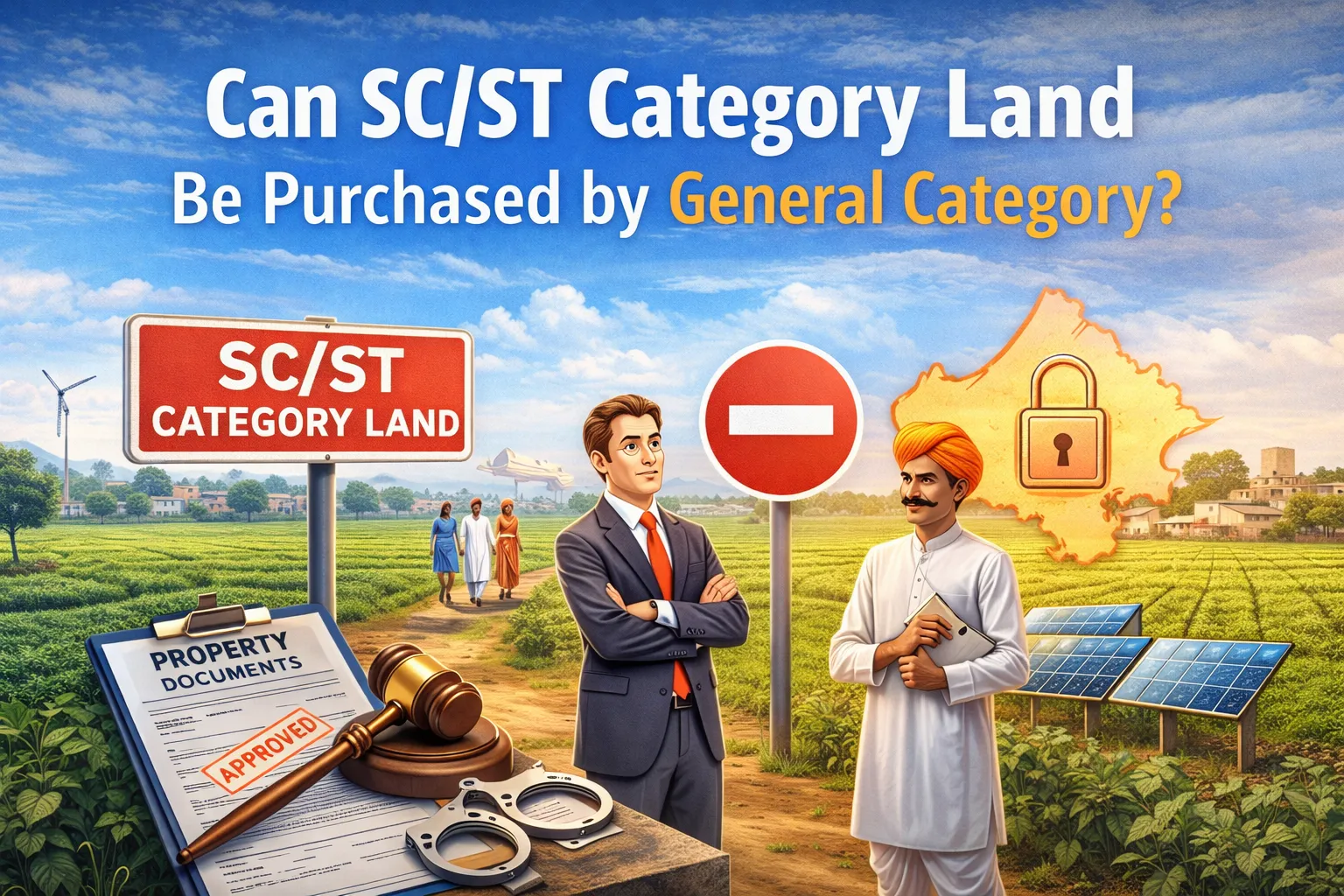
Buying land in Rajasthan or anywhere in India requires proper legal understanding, especially when it comes to restricted categories such as SC/ST allotted land. Many buyers are attracted to such properties due to lower prices, but lack of awareness about legal restrictions can lead to serious consequences.
This detailed guide explains whether a general category person can purchase SC/ST category land, the legal framework, exceptions, risks, and the correct process to follow.
Understanding SC/ST Category Land
SC/ST category land refers to land allotted by the government to individuals belonging to Scheduled Castes (SC) and Scheduled Tribes (ST). These allotments are typically made under welfare schemes aimed at improving the socio-economic condition of disadvantaged communities.
Such land is not treated like regular freehold property. It comes with specific conditions, especially regarding sale and transfer. The main purpose of these restrictions is to ensure that the benefits provided to SC/ST individuals are not misused or transferred unfairly.
Legal Framework Governing SC/ST Land
The rules related to such land in Rajasthan are governed by laws like the Rajasthan Tenancy Act, 1955 along with various government notifications and allotment conditions.
According to these laws:
- SC/ST allotted land cannot be freely sold or transferred
- The government retains authority over such land
- Any unauthorized transfer is considered illegal
In many cases, even transferring land within the same category may require prior approval from the concerned authority.
Can General Category Buy SC/ST Land?
The general rule is that a person from the general category cannot purchase SC/ST allotted land directly.
This restriction exists because the land is provided as part of welfare measures. Allowing unrestricted sale would defeat the purpose of such schemes and may lead to exploitation of beneficiaries.
Exceptions Where Purchase May Be Possible
Although direct purchase is generally not allowed, there are certain situations where a general category buyer may legally acquire such land.
Completion of Lock-In Period
Some lands come with a lock-in period, usually ranging from 10 to 20 years. After this period, the owner may apply for permission to sell the land.
Government Approval
If the seller obtains permission from the District Collector or relevant authority, the land may be legally transferred.
Conversion to Freehold
If the land is converted into freehold or regular category land, it becomes transferable to any buyer, including general category individuals.
Special Legal Cases
In rare situations, courts may allow transfer based on specific circumstances.
Risks of Buying SC/ST Land Without Approval
Purchasing such land without proper legal verification can be highly risky.
Some of the major risks include:
- Cancellation of registry by authorities
- Loss of ownership rights
- Legal disputes and long court cases
- Financial losses due to invalid transactions
- Difficulty in resale
Many buyers are misled by lower prices and enter into deals that later turn into legal complications.
Documents to Verify Before Buying
Before purchasing any land that may fall under SC/ST category, it is essential to verify all relevant documents.
These include:
- Original allotment letter or patta
- Jamabandi or land records
- Mutation records
- Conversion certificate if applicable
- NOC or permission from authorities
- Seller’s identity and eligibility
Proper verification helps ensure that the land is legally transferable.
How to Check Land Status in Rajasthan
To confirm whether a land is restricted or transferable, buyers should verify records through official sources.
This can be done by:
- Checking online land records such as Apna Khata
- Visiting the local tehsil office
- Consulting municipal or development authorities
This step is crucial to avoid any legal complications in the future.
Difference Between SC/ST Land and Freehold Land
SC/ST land and freehold land differ significantly in terms of ownership and transfer rights.
SC/ST land comes with restrictions on sale and requires government approval, whereas freehold land offers full ownership and can be sold without special permissions. From an investment perspective, freehold land is generally considered safer and more flexible.
Tips for Safe Land Investment
To avoid risks while investing in land, especially in Rajasthan, buyers should follow some essential guidelines.
Always conduct proper research before making any decision. Legal advice from a qualified property lawyer is highly recommended. Buyers should avoid deals that appear unusually cheap, as they often involve legal complications.
It is also important to ensure that all approvals and permissions are properly documented. Verifying the authority under which the land falls, such as local development bodies, adds another layer of security.
Common Mistakes Buyers Make
Many buyers make avoidable mistakes due to lack of awareness.
These include not checking the seller’s category, ignoring land allotment conditions, skipping legal verification, relying solely on brokers, and not confirming government approvals.
Avoiding these mistakes can save significant time, money, and legal trouble.
Importance of Legal Awareness for Property Buyers
Understanding property laws is essential for making safe and profitable investments. Awareness about restrictions on SC/ST land helps buyers make informed decisions and avoid illegal transactions.
For property platforms like Khali Plot, sharing such information builds trust and ensures that users are protected from fraud or legal risks.
Purchasing SC/ST category land in Rajasthan is not straightforward for general category buyers. In most cases, direct purchase is not allowed due to legal restrictions designed to protect the interests of SC/ST beneficiaries.
However, exceptions exist when proper permissions, conversions, or legal approvals are in place. The key to safe investment lies in thorough verification, legal guidance, and informed decision-making.
Before investing in any land, especially restricted categories, it is always advisable to proceed with caution and ensure that all legal requirements are fulfilled.